

To Live As Christ

A Personal Journey With God

About Me

Subscribe Via Email

Book Recommendations

Connect

  • Facebook
  • Instagram
  • LinkedIn
  • RSS
  • Twitter
  • YouTube
© 2026 To Live As Christ · Design by Steck Insights Web Design Logo
Freedom of Simplicity Featured Image

Book Review: Freedom of Simplicity by Richard Foster

January 1, 2017 by brianmichaelsteck Leave a Comment

To put it in a sentence: less is more.
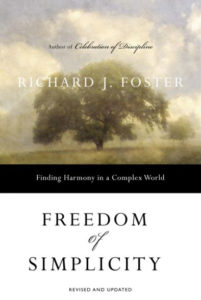
Freedom of Simplicity by Richard Foster

Freedom of Simplicity by Richard Foster beckons all Christians to reconsider the excess which we allow to consume and define our lives. From over-busy schedules to feeding the ever-present demand for “more”, Foster pushes on the cavities of our heart and probes the reader’s deeper desires, asking from whence they came.

A student and teacher of spiritual disciplines, Richard Foster is also the author of “Celebration of the Disciplines” which changed my life when I read it at 18 years old. Though Celebration of the Disciplines outlines a dozen core spiritual practices, it doesn’t place guilty burdens on the reader or muck things up with philosophical jargon, and nor does Freedom of Simplicity.

The call to the church to reconsider their ways is both gentle and yet profound. Richard makes a strong case for believers to evaluate whether we are playing into the same system that we are fighting against, which is a system that seeks everything but the Kingdom of God first.

He points out that:

“While simplicity provides an answer to the modern dilemma, it does not provide an easy answer.”

The “dilemma”, Foster describes, is that our “Contemporary culture is plagued by the passion to possess… [and] furthermore, the pace of the modern world accentuates our feeling of being fractured and fragmented.” In other words, we’re being crushed by rush.

After laying the groundwork for his case via scripture and history, the book goes on to explore both inner, outer and corporate responses to the call — which I love, because often authors and speakers will draw conviction to an issue by spotlighting it, but fail to offer an appropriate response.

The journey of inner simplicity involves God-granted self-acceptance and choosing to abide in the “divine center”. This divines center offers inner peace and the cure from the seemingly insatiable demand for more. Our identity is no longer wrapped in acquiring stuff and success.

Out of this inner stillness, Foster looks at how obedience to the Holy Spirit simplifies our lives; holiness is not about striving and complicated laws, but simple and pure momentary obedience to God. If we continue to draw back to “the center”, most of life’s anxiety-laden decisions become effortless “yes Lord, okay Lord” experiences.

Through vulnerable examples and relatable stories from his own life, Richard Foster unveils practical steps towards simplicity, such as (in my words):

  • The power of saying “no”
  • Disengaging from over-involvement in church activities or social commitments
  • Community living and the impact of sharing possessions instead of owning
  • Avoiding the bombardment of media and its’ inherent lies of marketing

This book, which was written 3 years before my own birth and which I’m now reading 35 years after it was penned, describes a plugged-in and over-consumptive society of America in the 1980’s. How much more valuable and poignant are these words today, considering we’ve been on a non-stop barrel ride down the waterfalls of excess since then?

Foster’s encouragement towards individual lifestyles of self-imposed pseudo-poverty for the sake of spiritual abundance, intertwine with his philosophical over what this would look like at a societal level. Freedom of Simplicity goes on to consider the impact of our consumptive and self-focused decision making on our world.

He makes the case that we can no longer ignore the plight of millions who are suffering starvation, abuse and neglect around the globe. By allowing and benefiting from the products of multinational corporations, we’ve unwittingly affected the lives of people all over the world. Our greed is exacerbating their need.

We don’t get to choose whether or not we are a part of a global economy or not. Our lifestyle has already demanded this; the shoes we wear, the cars we drive, this computer I type on… in the name of affordability and luxury, we’ve allowed a burden to be placed on the third-world, and we have a responsibility to accept that guilt and respond.

In Freedom of Simplicity, Foster only provides a skimming view of the subject, but invites the church to take the lead in acknowledging our part and moving forward towards healing and balance.

Conclusion

In the end, this book hit me squarely between the eyes, convicting me in the midst of the Christmas season and in a time of my life when I was beginning to question my own “success” in the world’s eyes. I happened along the book in the right timing, because it has drawn my thoughts back to God’s perspective on my life and His desire to restore simple love and obedience in His children.

I highly recommend that you pick up a copy of Freedom of Simplicity — or better yet, that you rent it from the library or borrow mine — it just may be the key to unlocking inner simplicity and uncovering God’s design for joy in your life.

Filed Under: Soul Care Tagged With: Richard Foster, Simplicity

Divine Invasion

Divine Invasion

December 25, 2016 by brianmichaelsteck Leave a Comment

On this Christmas morning, I’m reminded of Christ’s divine invasion on the world. Last night, we sat the kids down (whatever that means with a toddler) and turned our eyes towards the story of Christ’s birth. I read The Jesus Storybook Bible to my children:

“And there, in the stable, amongst the chickens and the donkeys and the cows, in the quiet of the night, God gave the world his wonderful gift. The baby that would change the world was born. His baby Son.”

The savior of the world — Emmanuel, God with us — invaded our privacy. He stepped into our hopeless mess and provided a way back to Him, when there was no other way.

We attended New Life Church in Colorado Springs this weekend and pastor Glenn Packiam told a story of his son confessing to him that he felt his “heart was dark”. When Glenn realized what his son was saying, he asked if his wanted to let God remove that dark heart. In an instant, that prayer provided a divine invasion in that child’s soul.

My heart needs it too.

It’s so easy to go cerebral and focus on all the incessant demands of the day. But when I acknowledge that not only our world but also my heart was “divinely invaded” by Jesus, a peace is restored and a weight is lifted. His divine invasion occurred some 2,000 years ago in a small manger, but it also occurs each time I turn my thoughts towards Him and re-surrender before the Lord.

When is the last time you had a “divine invasion”? Are you due?

God, you love us so much, despite all our iniquity. We fight you and disobey you all day long, yet you still pursue, and I don’t always understand why. But I’m thankful, because I can’t do it on my own. And once more, I invite you to be my Emmanuel. You are with me now and desire to be with me forever. Forgive my “dark heart” and draw my will and emotions to bless and enjoy you at all times. May you get the glory this Christmas day.

Filed Under: Worship Tagged With: Christmas, Divine Invasion

How To Be Wretched Featured Image

How to be wretched

June 30, 2016 by brianmichaelsteck Leave a Comment

Throughout scripture lie a series of positive qualities that are characteristic of holiness and Godliness. But every once in a while, the writer veers from this pattern and elaborates on the negative characteristics which mark some people. In short, it’s like a checklist for “how to be wretched.”

Not that we want to focus on the sinful qualities, and not that we have much control to overcome them apart from the Spirit’s help, but nevertheless, I don’t want to overlook any scriptural lists that might help convict my heart and align my life with Christ’s.

Checklist for how to be wretched

Before you discount this entirely, calm your heart and mind as you read these. Ask God to reveal if of these sins from 2 Timothy 3:1-9 have become a part of you:

  • Lover of yourself
  • Lover of money
  • Boastful
  • Proud
  • Abusive
  • Disobedient to your parents
  • Ungrateful
  • Unholy
  • Without love
  • Unforgiving
  • Slanderous
  • Without Self-control
  • Brutal
  • Not a lover of the good
  • Treacherous
  • Rash
  • Conceited
  • Lover of pleasure rather than of God
  • Having a form of Godliness but denying it’s power

If you’re like me, some of those items hit home in an embarrassing and convicting way.

There may not be, on this side of heaven, a way to be entirely without any of these characteristics. God is in the beautiful and awful process of making each of us holy (sanctification). But to look over this list and acknowledge weaknesses allows me to humble myself before the Lord again and ask for His help.

God is good and faithful to forgive us and free us, who know all-too-well how to be wretched, of our sin.

And frankly, He does it so we can grow in intimacy with Him, not because he needs us to be good. His Son, Jesus, was already fully good.

He wants to have relationship with us. He wants to walk with us through the dirt and the grime of cleaning up our messy hearts and minds.

He’s not saying “be good so I can love you”. He’s saying, “I love you. Let me be with you and my goodness will purify all.”

Filed Under: Scripture Studies Tagged With: Sanctification

  • « Previous Page
  • 1
  • …
  • 5
  • 6
  • 7
  • 8
  • 9
  • …
  • 35
  • Next Page »

Categories

  • Church Philosophy (8)
  • Discipleship (26)
  • Family (7)
  • Government (1)
  • Lordship (14)
  • Music (4)
  • Prayer (3)
  • Scripture Studies (7)
  • Soul Care (4)
  • Stewardship (4)
  • Suffering (2)
  • Surrender (18)
  • The Kingdom Centered Mind (8)
  • Uncategorized (2)
  • Worship (10)

Quotes

Loading Quotes...

Affiliate Disclaimer

This website contains affiliate links, however we only recommend books, music and videos that we have used, benefitted from and feel will improve the lives of our readers.